Ever seen a ceiling stain shaped like Tasmania? Somebody ignored it. Probably for a couple of winters. Small leaks are patient, and they always send the bill on the wettest week of the year.
Property maintenance services are the routine upkeep, scheduled checks and repairs that keep a building safe and watertight. A few jobs have a fixed schedule in NSW. Smoke alarms get tested every month and replaced every 10 years, and strata schemes must review their 10 year capital works plan at least every five years.
What property maintenance services cover in practice
Most people picture a handyman with a ladder. That’s one slice. I’d split the work three ways. Routine maintenance is the small, scheduled stuff: testing alarms, clearing drains, a lick of paint. Preventative maintenance is checking something before it fails, like a balcony membrane. Remedial work is repairing damage that’s already there, such as cracked concrete or a leaking wet area.
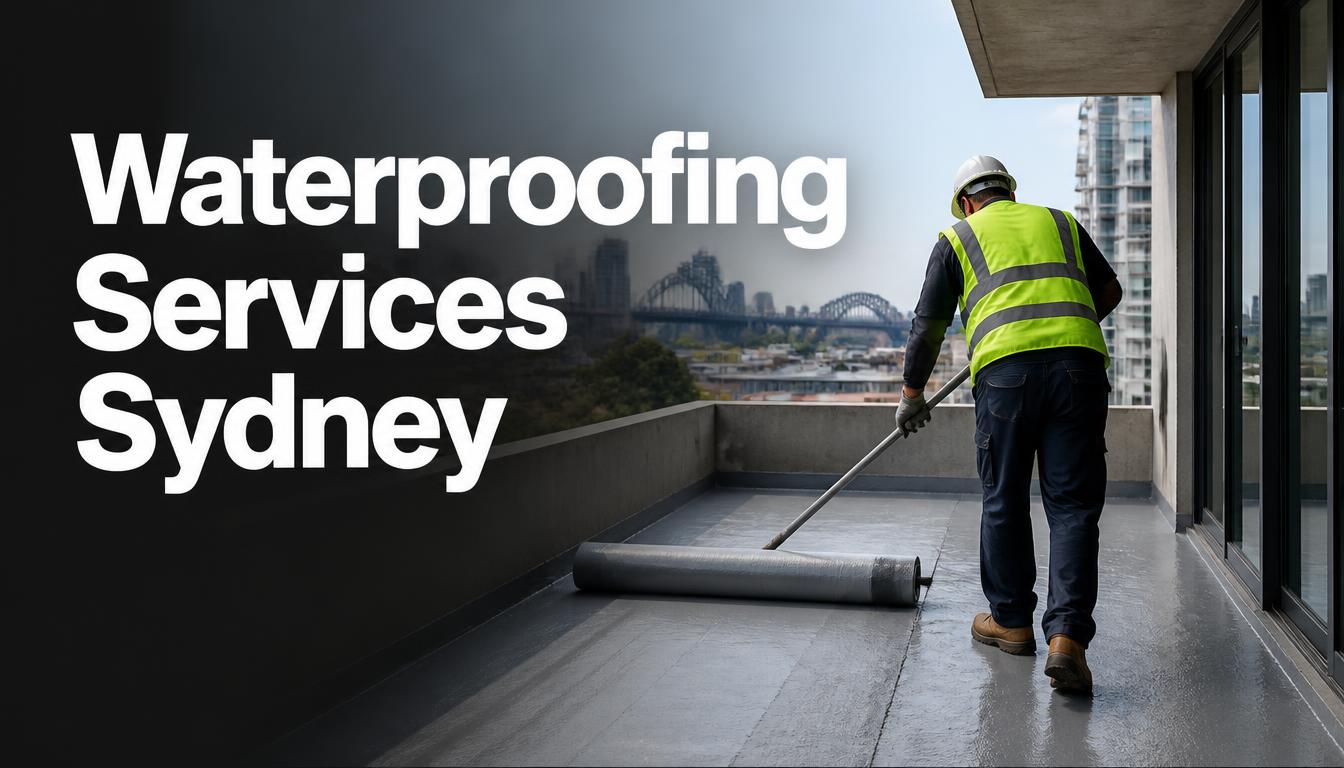
Ravelle Group works mostly in those last two. That means waterproofing, remedial works and concrete repairs, with chemical injection work in the mix. Waterproofing, for the record, is a protective layer, usually a membrane, that stops water getting into a building. It’s the bit where guessing costs real money.
What pushes a building’s maintenance needs up or down:
- Age, and whether the original waterproofing still works.
- Sun, heavy rain and salty air if you’re near the water.
- How many balconies, bathrooms and basements there are.
- House or strata scheme with shared common property.
- Old defects or repairs nobody ever traced to the source.
How often each job comes around
Some things run to a fixed schedule. Most of the numbers below come from Fire and Rescue NSW and the NSW Government.
| Task | How often | Source |
|---|---|---|
| Test smoke alarms | Every month | Fire and Rescue NSW |
| Vacuum dust off smoke alarms | Every 6 months | Fire and Rescue NSW |
| Replace alkaline alarm batteries | Every 12 months | Fire and Rescue NSW |
| Replace the whole smoke alarm | Every 10 years | Fire and Rescue NSW |
| Landlord check of smoke alarms in a rental | Every year | Fire and Rescue NSW |
| Review of a strata 10 year capital works plan | At least every 5 years | NSW Government |
Waterproofing and concrete? No calendar. They go by condition, which is why an occasional look from someone who does this every day beats guessing. Ravelle’s piece on preventative maintenance in commercial and strata buildings digs into that side.
Who’s responsible, and who needs a licence
Strata buildings
Common property is the shared part of a strata scheme, and your strata plan and bylaws say exactly what counts. The owners corporation looks after it, and you look after what’s inside your lot. That’s the NSW Government’s position. The administrative fund is the everyday account that pays for day to day repairs. The capital works fund is the scheme’s savings for major repairs, and the 10 year plan is supposed to keep it healthy. And if a scheme sits on its hands, NSW Fair Trading can step in.
Licences and standards
Here’s one people miss. According to the NSW Government’s licensing page, waterproofing is trade work, and you need a contractor licence once residential work tops $5,000 in labour and materials, GST included. Look the number up on the NSW Fair Trading register before anyone picks up a tool. Wet area certificates from councils, Clarence Valley Council’s among them, point to Australian Standard AS 3740 and the National Construction Code. Ask which one your quote follows.
A simple routine you can start this month
No spreadsheets needed. After a proper downpour, walk the property and look up. Ceilings under balconies. Bathroom corners. The foot of external walls. Concrete edges. Snap a dated photo of anything odd, always from the same spot, because a stain that grew between two photos is hard to argue with. Twice a year is plenty for most homes, and it takes under an hour.
Clear leaves out of gutters, downpipes and balcony drains too. A blocked drain sends water exactly where it shouldn’t go, and it’s the cheapest fix in this whole article.
Keep repair invoices and warranties in one folder. Future you will be grateful, and so will any buyer.
Own a unit? Ask for the 10 year plan. The NSW Government says you’ll find it in the annual general meeting papers, through the strata manager, or by inspecting the owners corporation’s records. Scan the items due in the next couple of years, then ask the awkward question: can the fund cover them? Better to hear no now than to open a special levy notice later.
How to compare providers and quotes
Get an inspection before a price. A quote written without seeing the problem is a guess with a logo on it. Ask what the report will actually tell you, because you want to know where the water’s coming from, not just where it’s showing up. Get scope and warranty terms in writing, and read every line, because two quotes that look alike on page one can differ wildly by page three. Then browse recent projects and see whether the finished work looks like what you need, from leak rectification to concrete repair.
Give the about page of any contractor a few minutes too. Real names, real experience, a phone that gets answered.
The biggest mistake? Treating the stain. Paint covers water damage for a season, maybe two. It doesn’t stop a single drop.
Picture a unit owner who repaints a brown patch on the ceiling. Looks perfect for a few months. Then the first heavy rain brings it back, because the failed balcony membrane above was never touched. Paint twice, pay twice, still leaking. (An example only, not a real client.)
My view: pay for the diagnosis first. A cheap repair aimed at the wrong cause ends up the dearest job on the list.
FAQ
What do property maintenance services include?
Property maintenance services are the routine upkeep, scheduled safety checks and repairs that keep a building in good condition. On the structural side that means waterproofing, concrete repair and remedial building work, sitting alongside simpler jobs like alarm testing and drain clearing. How much of each you need depends on the building’s age and exposure.
How often should a strata scheme review its maintenance plan?
At least every five years. The NSW Government says strata schemes must hold a 10 year capital works plan, though two lot schemes may be exempt. The plan also feeds the capital works estimates a scheme presents each year.
Do I need a licence for waterproofing work in NSW?
Yes, once the job passes $5,000 in labour and materials including GST, according to the NSW Government. Ask for the licence number. Then look it up yourself on the NSW Fair Trading register.
Who pays for repairs to common property?
The owners corporation. Owners fix what’s inside their own lot. Smaller repairs draw on the administrative fund, while big items come from the capital works fund.
What are early signs a building needs repair work?
Damp or stained ceilings, bubbling paint, visible cracks, white salt deposits on concrete or brick. Any of those can mean water is getting in. Don’t wait for the damage to spread.
Want a specialist to look at your building before a small problem grows? Book an inspection with Ravelle Group, call 0438 068 800, or visit 38 Shoreline Dr, Rhodes NSW 2138.